 United Kindom
 United States
 Europe
 Australia
 France
 Spain
Spain
 Italy
Italy
 Canada
What Age Is Best for a Play Kitchen? A Complete Parent's Guide
May 26,2026 | Robud-UK
A child pretending to “cook” dinner might look like simple fun, but behind every tiny frying pan and wooden carrot is something much bigger happening. Imagination is growing. Language skills are developing. Confidence is building one pretend recipe at a time.
That’s why play kitchens have stayed popular for generations. They’re not just toys—they become grocery stores, cafés, bakeries, family restaurants, and sometimes even rocket ship control rooms. The magic is in how children use them.
But, here’s the big question: what age is actually best for a play kitchen? This guide breaks down exactly what to look for at every age, which features truly matter, how size affects play, and the mistakes many parents regret after buying one too quickly.
The Short Answer
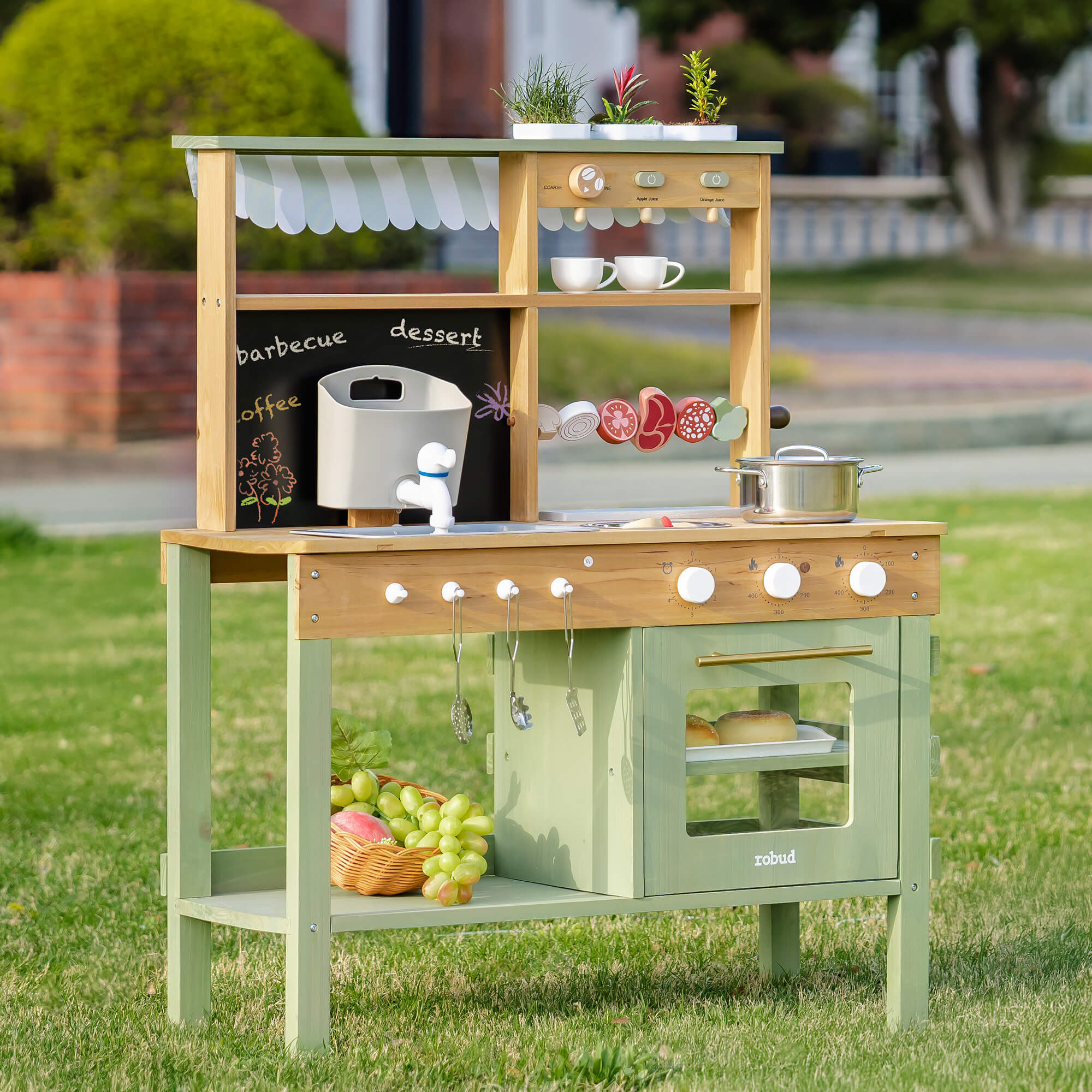
ROBUD Outdoor Mud Play Kitchen Green
The best age for a play kitchen is usually between 2 and 5 years old, but many children begin enjoying one as early as 12 to 18 months and continue playing with it well beyond kindergarten.
The “perfect age” is really when your child begins copying everyday activities. If they pretend to stir food, hand you invisible snacks, or imitate cooking sounds, they’re probably ready.
What Features Actually Matter by Age
Not every play kitchen works for every child. A toddler and a six-year-old play very differently, which means the ideal features change as children grow.
Ages 1–2: Keep It Safe and Simple
At this age, children are still exploring through touch, movement, and repetition. They don’t need dozens of accessories or complicated features. What matters most is safety and accessibility.
For their age, look for rounded corners, smooth wooden surfaces, non-toxic finishes, large accessories without choking hazards, and easy-open doors and knobs.
Toddlers often enjoy opening cabinets repeatedly, turning knobs, pretending to stir, and taking items in and out of shelves. This stage is less about “cooking” and more about discovery. A compact wooden kitchen with a few pretend foods is usually enough.
Ages 2–3: The Imagination Starts Exploding
This is where pretend play becomes more intentional. Children begin copying adults constantly, whether it’s making coffee, washing dishes, or cooking dinner.
At this stage, interactive features suddenly matter more. Good additions include play sinks and faucets, clickable knobs, and hanging utensils. This is also when children begin developing social and emotional skills through role play. They imitate conversations, routines, and family interactions they see every day.
Wooden kitchens tend to perform especially well here because they’re durable enough for constant use and energetic play.
Ages 3–5: The Golden Years for Play Kitchens
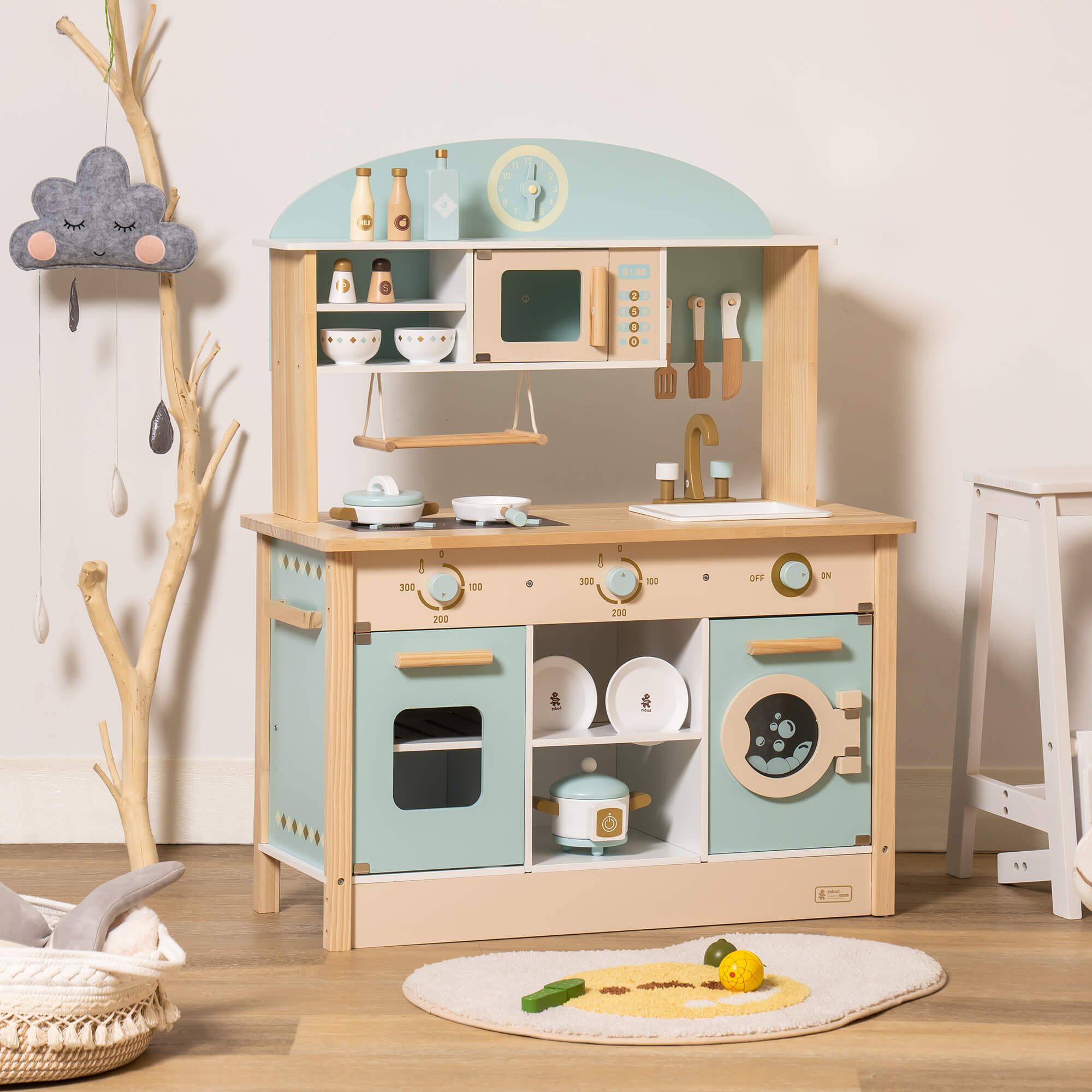
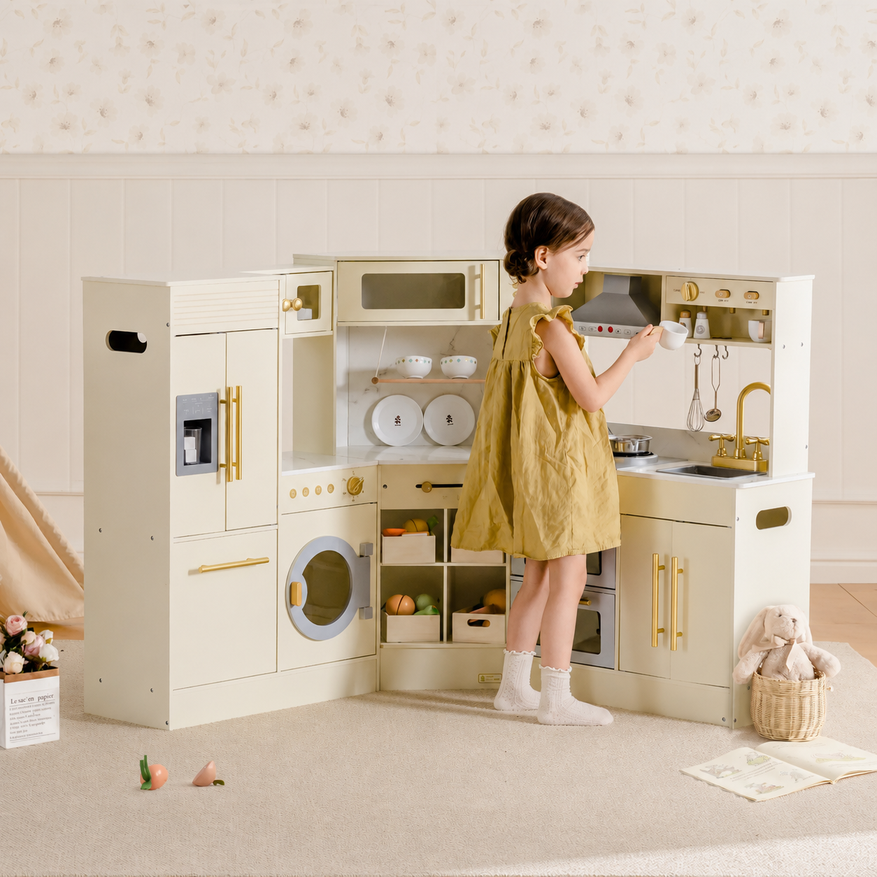
ROBUD Wooden Kids Kitchen PlaySet Seris
This is the sweet spot. Preschoolers transform play kitchens into entire worlds. One minute they’re running a bakery. Next, they’re hosting a restaurant for dinosaurs and superheroes. At this age, children benefit from larger setups, more storage space, detailed accessories, realistic design elements, and multi-child play areas.
Features that encourage creativity become more valuable than flashy electronics. Kids this age prefer ice makers, chalkboards, multiple cooking stations, and pretend appliances. This is also the age where parents often notice long independent play sessions, which every parent appreciates.
Ages 5 and Up: Yes, They Still Use It
Many parents assume kids “outgrow” play kitchens by age five. Surprisingly, that’s often not true. Older children simply play differently. Instead of simple imitation, they create restaurant role-play, family scenarios, and cooking competitions.
The kitchen becomes a storytelling tool. For this age group, durability and realism matter more than bright colors or cartoon styling. A well-designed wooden play kitchen can easily remain interesting through age seven or even older.
The Size Question: Does It Actually Matter?
Yes, but probably not in the way most parents think. Many people assume bigger automatically means better. In reality, the best size depends on the following:
- Your child’s age
- Available space
- How many children will use it
- How long you want it to last
Small kitchens are great for younger toddlers and small bedrooms. They are perfect for first-time pretend play. Here, you can easily supervise them and easily clean up. But the downside is they outgrow them faster.
Medium-sized kitchens are ideal for most homes, as they allow for multiple activities. This size works especially well for ages 2–6. Larger kitchens are best for shared play, where multiple children play together.
The extra counter space and storage encourage collaborative play, which helps children develop communication and teamwork skills. However, oversized kitchens can overwhelm smaller spaces and younger toddlers.
Common Mistakes Parents Make (And How to Avoid Them)
Buying Based Only on Looks
A beautiful kitchen isn’t always the best one. Some trendy models prioritize appearance over stability, durability, storage, and ease of play. However, focus on solid wood construction, durability, and functional features.
Choosing Too Many Electronic Features
Lights and sounds may seem exciting initially, but many children lose interest quickly. In fact, simpler kitchens often encourage more imaginative play because children create the experience themselves. Open-ended toys typically hold attention longer than highly scripted ones.
Ignoring Height and Accessibility
One common mistake is buying a kitchen children physically can’t use comfortably. If counters are too tall, toddlers struggle to engage, play becomes frustrating, and interested fades quickly. A properly sized kitchen keeps children naturally involved.
Forgetting Storage Space
Pretend food, utensils, pots, cups, and accessories add up fast. Without storage, pieces get lost, play areas become cluttered, and cleanup becomes stressful. Good built-in storage makes a huge difference long-term.
Buying Too Young “For the Future”
Parents sometimes buy oversized kitchens hoping children will “grow into them.” But if a toy feels inaccessible now, kids may ignore it entirely. It’s usually smarter to buy something developmentally appropriate rather than planning too far ahead.
FAQs
Can a 1-year-old use a play kitchen?
Yes, but in a very simple way. At this age, children mostly enjoy sensory exploration. Choose a sturdy kitchen with large, safe accessories and avoid small detachable pieces.
How long will my child actually use a play kitchen?
Many children actively use play kitchens from ages 2 to 6, with some continuing beyond that depending on personality and play style. Imaginative children often return to pretend play for years, especially when the kitchen supports storytelling and social games.
Is a play kitchen worth buying for a 5-year-old?
Absolutely. Five-year-olds often engage in deeper imaginative play than toddlers. They create stories, role-play restaurants, and invent games involving cooking and serving. A realistic, well-built kitchen can still provide years of value at this age.
What’s the difference between a good play kitchen and a cheap one?
The biggest differences are usually durability, safety, and stability. While higher-quality wooden kitchens last longer, cheaper options break more easily over time.
Comment